
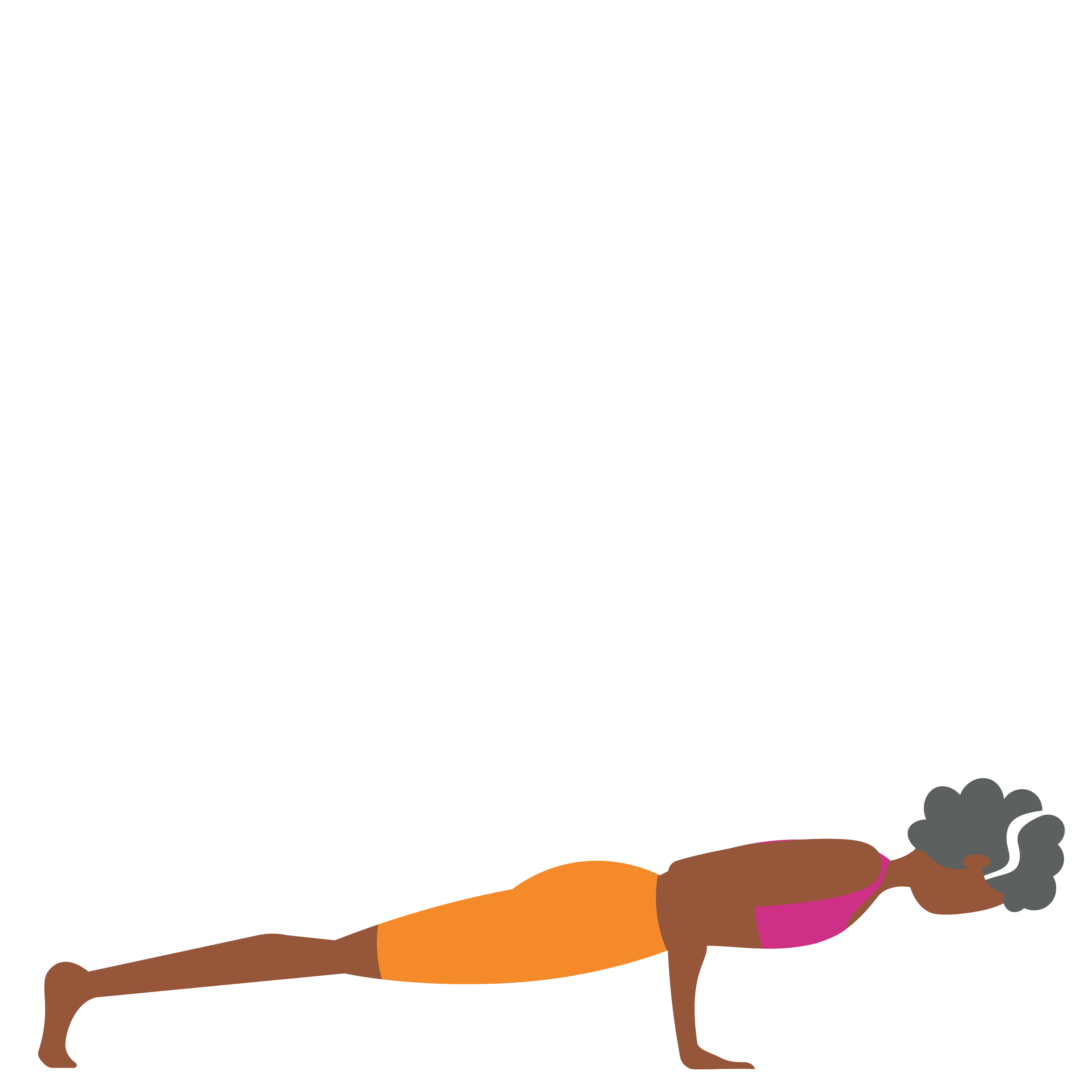
four limbed staff
Chaturanga Dandasana
symmetrical arm support
chaturanga - Four limbed
danda - staff
ASANA - POsture
This strengthening posture builds powerful upper body endurance, engages the core/abdominal muscles, and develops stability in the shoulders and wrists. It is a foundational posture in most vinyasa classes and in Sun Salutations, acting as the transitional link between plank and the following backbend (eg. Cobra).
Chaturanga strengthens the backs of the arms (triceps), chest (pectorals), and abdominal muscles and requires strength, controlled movement and precise alignment.
Commonly known as Chaturanga or sometimes Low Plank, its full Sanskrit name Chaturanga Dandasana translates to Four Limbed Staff Posture, referring to the four points of contact (two hands and two feet) supporting the body like a Straight Staff (plank).
How to get into the pose:
Begin in Plank with your shoulders over your wrists and your body forming a straight line from head to heels
On an inhale, shift your body slightly forward so your shoulders move just past your wrists.
Keep your elbows drawn in quite close to your sides (at about a 90-degree angle) and slowly lower your body in one straight line until your upper arms are parallel to the floor
Try to keep your elbows hugged in towards your ribcage and not flaring out
Maintain a strong core connection so your hips do not drop low or lift too high
Keep your gaze slightly forward with your neck long
Press firmly through your hands.
To come out, either lower all the way to the mat or transition directly into Sphinx, Cobra, Upward Dog or Locust
Remember to create balance between effort and ease in your pose
How long to stay in the pose:
If holding, try three to five breaths (or as long as you can maintain proper alignment)
In flows and Sun Salutations, Chaturanga is usually held for one breath before transitioning
Gaze (Drishti):
Slightly forward
Modifications you can take to make this pose more accessible:
Take Knees Chest Chin as an alternative.
Use blocks under your hands to reduce the depth of the lowering
Practice with a strap around your upper arms to build awareness of elbow positioning
Contraindications / Cautions:
Avoid if you have an acute wrist, shoulder, or rotator cuff injury
Do not practice if you feel pain in the shoulders or lower back. Modify with knees down or stay in Plank instead
Enjoy your practice and get in touch if you have any questions.