
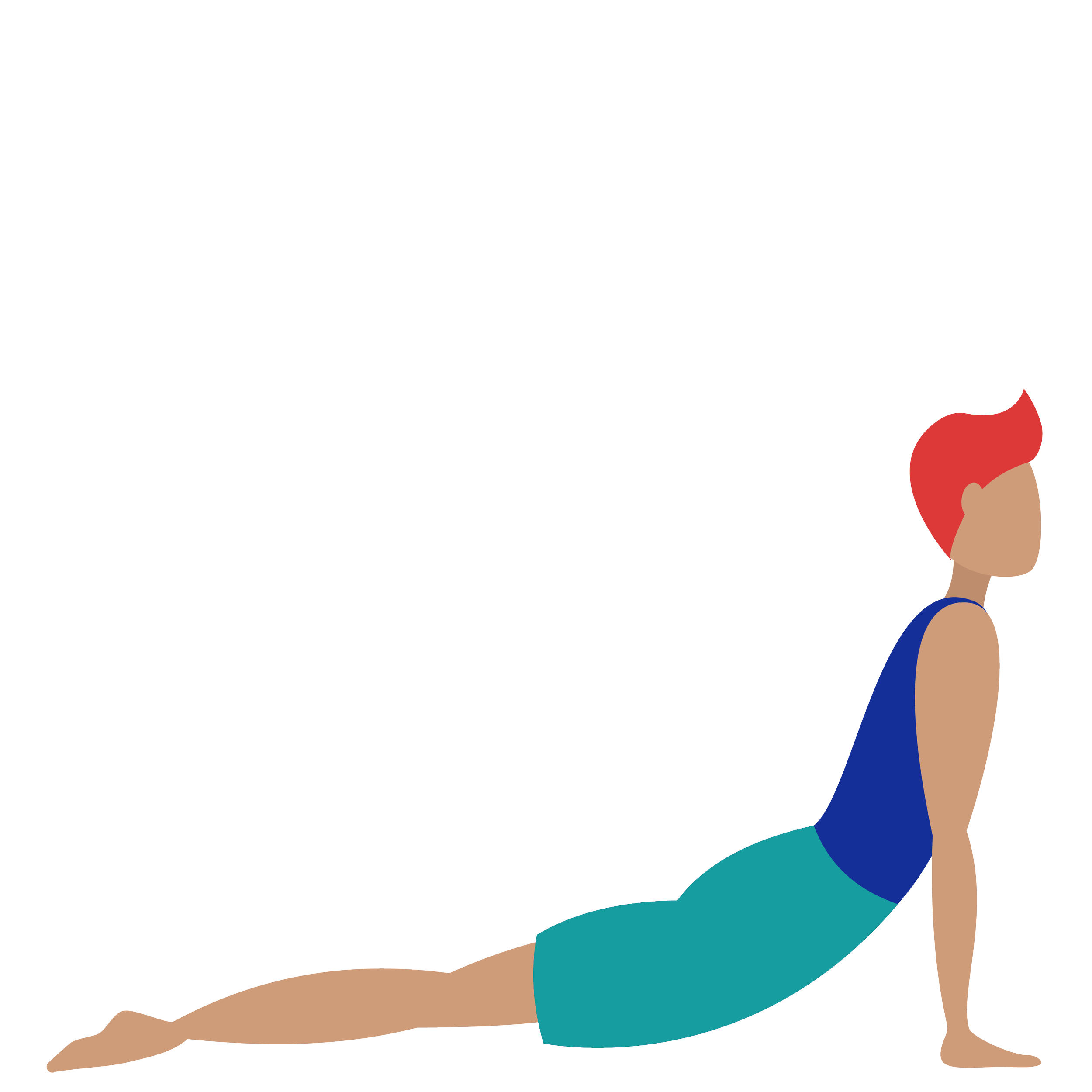
UPWARD FACING DOG
Urdhva Mukha Svanasana
symmetrical arm support
URDHVA - UPWARD
MUKHA - FACE
SVANA - DOG
ASANA - POSTURE
This strong backbend strengthens your spine, arms, and wrists while opening the chest, shoulders, and abdomen. It stretches the hip flexors and energises the body.
It is an important posture in Sun Salutations and flows.
How to get into the pose:
Lie on your front with your hands outside your lower ribs, elbows tucked in towards your body
On an inhale, press firmly into your hands and straighten your arms, lifting your chest and thighs off the mat
Keep the tops of your feet pressing down into the floor and your legs active with thighs lifted
Roll your shoulders down and back, broaden across your collarbones, and draw your shoulder blades together
Lengthen your neck and gaze forward or slightly upward, keeping the back of your neck long
Press the pubic bone lightly into the mat and engage your core muscles
To exit, exhale and lower back down or push back into Downward Facing Dog or Childs Pose
You will also often enter Upward Facing Dog from Chaturanga Dandasana or Knees Chest Chin. The instructions are the same, although the front body may not start touching the mat, particularly from Chaturanga.
Remember to create balance between effort and ease in your pose
How long to stay in the pose:
Three to five breaths if practicing as a stand alone posture. In Sun Salutation and flows it is usually held for just one inhale.
Gaze (Drishti):
Forward or slightly upward
Modifications you can take to make this pose more accessible:
Keep your thighs on the mat and only lift the chest
Place your hands on yoga blocks to reduce the depth of the backbend
Use a folded blanket under your pelvis for lower back support
Contraindications / Cautions:
Avoid if you have wrist, shoulder, or lower back injuries
Do not practise with recent or chronic neck issues
Enjoy your practice and get in touch if you have any questions.